

USDT TRC20 vs BEP20 vs ERC20: Cheapest and Fastest Network
TRC20 vs BEP20 — which should you pick? A side-by-side comparison of the three biggest USDT networks (TRON, BSC, Ethereum) on fees, speed, security, and exchange support, so you choose the right one and never lose funds to a wrong network.
USDT is the largest stablecoin and lives on 10+ chains. The three most common are TRC20 (TRON), ERC20 (Ethereum), and BEP20 (BSC). Picking the wrong network can cost you hundreds in extra fees — or worse, lose your funds entirely. Here's how to choose.
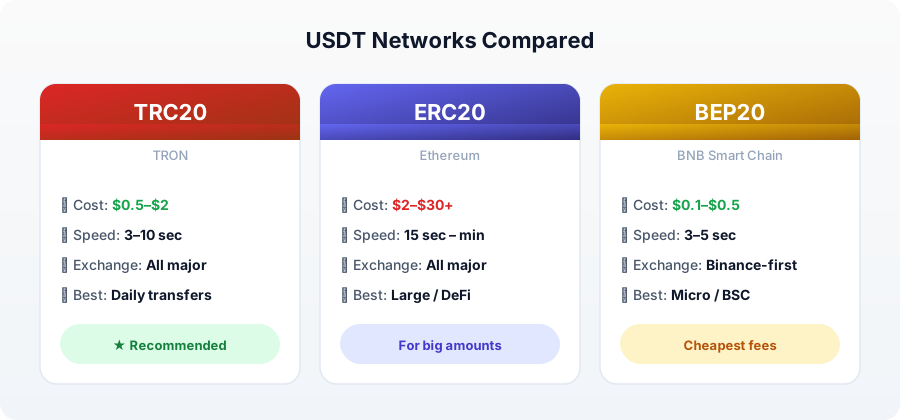
Quick Comparison
| Dimension | TRC20 (TRON) | ERC20 (Ethereum) | BEP20 (BSC) |
|---|---|---|---|
| Cost per transfer | $0.5–$2 (cheaper with energy rental) | $2–$30+ | $0.1–$0.5 |
| Confirmation time | 3–10 sec | 15 sec – minutes | 3–5 sec |
| Network reliability | ★★★★ | ★★★★★ | ★★★★ |
| Exchange support | ★★★★★ | ★★★★★ | ★★★★ |
| Wallet support | TronLink, TP, etc. | Almost all | TP, MetaMask, etc. |
| Best for | Daily transfers (large & small) | Large transfers / DeFi | High-frequency micro |
TRC20 (TRON) — The Default for Daily Transfers
Pros
- Extremely cheap: burning TRX ≈ $2; with energy rental, can drop to $0.1
- Fast: 3-second confirmations
- Supported by all major exchanges
- Mature compliance / blacklist tooling
Cons
- DeFi ecosystem smaller than Ethereum
- Slightly different smart contract environment
Best for
- Daily USDT transfers (P2P, remittance)
- Merchant payments (high frequency, small amounts)
- OTC trading
ERC20 (Ethereum) — For Large Amounts and DeFi
Pros
- The original USDT network with the deepest ecosystem
- DeFi, NFTs, derivatives all built on Ethereum
- Best-in-class security track record
- Preferred for high net worth assets
Cons
- High and volatile gas — can exceed $30 during congestion
- Slower during peak load
Best for
- Large transfers ($100k+, where fees are negligible)
- DeFi participants
- Large institutional settlements
BEP20 (BSC) — The Cost-Performance Pick
Pros
- Low fees (~$0.1)
- Fast confirmations
- Deep Binance ecosystem integration
Cons
- Higher centralization (21 validators)
- Some exchanges less supportive than TRC20
Best for
- Active Binance ecosystem users
- Users not concerned about decentralization
- BSC DeFi users
TRC20 vs BEP20: Which to Use for Everyday Transfers
This is the comparison most people actually agonize over — both are cheap and fast, but they fit different situations.
| Dimension | TRC20 (TRON) | BEP20 (BSC) |
|---|---|---|
| Cost per transfer | ~$2 burned, as low as $0.1 with rented energy | flat ~$0.1–$0.5 |
| Speed | 3–10 sec | 3–5 sec |
| Exchange support | ★★★★★ (deposits/withdrawals nearly everywhere) | ★★★★ (some smaller exchanges don't list it) |
| Decentralization | Relatively higher | Only 21 validators — more centralized |
| Best for | General daily transfers, OTC, moving between exchanges | Inside the Binance ecosystem, BSC DeFi |
The short answer:
- Most people sending USDT should pick TRC20 — it has the widest exchange support, and with energy rental a transfer drops to about $0.1, cheaper than BEP20, while being accepted almost everywhere.
- Only choose BEP20 if you mainly operate inside the Binance ecosystem, or the other party explicitly asks for it.
- Critical reminder: TRC20 and BEP20 USDT are not interchangeable — always confirm the network matches before sending.
If your everyday transfers are mostly TRC20, bookmark Tron4u Energy Rental — it saves 80–95% per transfer.
Which to Pick — By Scenario
| Scenario | Recommended |
|---|---|
| Sending to a friend/family | TRC20 |
| Merchant daily settlement | TRC20 |
| Arbitrage between exchanges | TRC20 or BEP20 |
| On-chain DeFi | ERC20 |
| Large transfer (100k+ USDT) | ERC20 (highest security) |
| Absolute lowest fee | BEP20 |
| Receiving from someone | Match their network |
Critical Warning: Wrong Network = Lost Funds
USDT on different networks is not interchangeable. If someone sends you a TRC20 address and you transfer using ERC20:
- Funds land on the same address but on Ethereum
- If the receiver's wallet doesn't control the private key on that chain, funds are gone forever
- Even when recoverable, it requires complex on-chain manoeuvres
Best practice:
- Always confirm the network before sending
- Double-check the network field on the send screen
- Send 5–10 USDT as a test first
- Save the transaction hash
TRC20 Energy Model (Critical Savings Knowledge)
TRC20 transfers consume energy, not a flat fee. Energy comes from:
- Burning TRX: auto-deducted (~27 TRX per transfer)
- Staking TRX: lock up TRX for 14-day unstake
- Renting energy: pay as you go — cheapest
See The Complete Guide to USDT TRC20 Transfer Fees on TRON for the full breakdown. For most users, renting energy via Tron4u saves 80-95% vs burning TRX — a few dollars per transfer instead of $27.
Should You Use a Bridge?
If your USDT is on the wrong network, bridges like cBridge, Multichain, or Orbiter can move it. But:
- Bridges charge their own fees ($1–$10)
- Several bridges have been exploited (Multichain collapsed, for example)
- For large amounts, prefer exchange withdrawals
Rule of thumb: use an exchange when possible; bridges only for small or urgent cases.
Summary
- Default to TRC20 for daily use (cheap, fast, ubiquitous)
- Use ERC20 for large transfers (security beats everything)
- BEP20 if you live in Binance's ecosystem
- Always confirm network alignment before sending
If you're a TRC20 user, bookmark Tron4u Energy Rental — saves you a few bucks every time.
Frequently asked questions
Which USDT network is the cheapest?
BEP20 (BSC) has the lowest flat fee (~$0.1-0.5). But TRC20 (TRON) with energy rental can drop to about $0.1 per transfer, versus $2-30+ on ERC20 (Ethereum). For everyday transfers, TRC20 with rented energy is the cheapest practical choice.
Is USDT TRC20 or ERC20 better for transfers?
For cost and speed, TRC20 wins for most users — transfers are fast and cost cents with energy rental, while ERC20 can cost $2-30+. ERC20 mainly makes sense for very large transfers or deep DeFi use where fees are negligible relative to the amount.
Why is USDT TRC20 cheaper with energy rental?
TRC20 transfers consume energy, not a flat fee. Without energy the network burns ~27 TRX, but renting energy via a service like Tron4u costs a few dollars or less — saving 80-95% versus burning TRX.
Related posts
The Complete Guide to USDT TRC20 Transfer Fees on TRON
Understand why USDT TRC20 transfers cost TRX, how energy and bandwidth work on TRON, and how energy rental can dramatically cut your transfer cost.
Cheapest TRON Energy Rental in 2026: Real Prices Compared
How much does TRON energy rental cost in 2026? Real price benchmarks: from 0.8 TRX per USDT transfer vs 13–27 TRX burned. What drives the price, what counts as cheap, and how to avoid overpaying.
Best Telegram Bot to Rent TRON Energy in 2026 (From 0.8 TRX)
The best Telegram bot to rent TRON energy, and how to avoid seed-phrase scams: what a safe bot looks like, live quotes, delivery in seconds. Try @tron4u_bot — from 0.8 TRX per USDT transfer.