

The Complete Guide to USDT TRC20 Transfer Fees on TRON
Understand why USDT TRC20 transfers cost TRX, how energy and bandwidth work on TRON, and how energy rental can dramatically cut your transfer cost.
USDT-TRC20 has become the default network for most crypto users thanks to its speed and low cost. Yet many people are still surprised to see dozens of TRX disappearing from their wallet after a transfer. This article breaks down TRON's energy and bandwidth model so you know exactly where your TRX is going.
TRON's Resource Model
Every TRON operation consumes two kinds of resources:
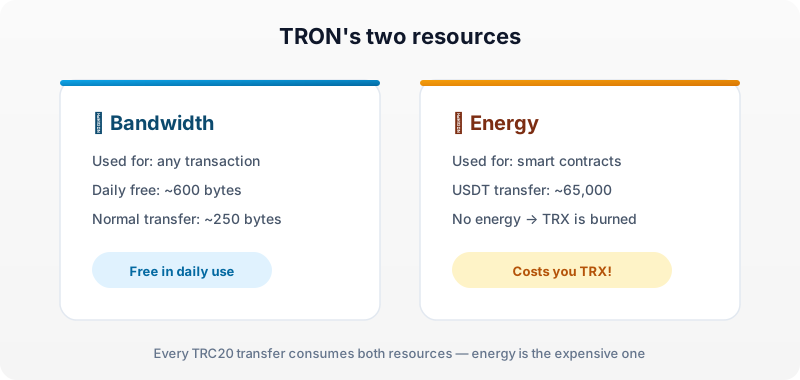
- Bandwidth: Each account gets ~600 bytes free per day. A normal TRX transfer uses ~250 bytes — enough for casual use.
- Energy: Required for smart contract calls. Since USDT is a TRC20 contract, every transfer consumes energy.
When your account is out of energy, TRON automatically burns TRX to cover the shortfall. That's the TRX you see vanishing.
How Much Energy Does One USDT Transfer Cost?
- Receiver already holds USDT: roughly 65,000 energy
- Receiver has no USDT balance yet: roughly 130,000 energy (extra cost to initialize their USDT record)
At the official burn rate, 65,000 energy ≈ ~27 TRX, and 130,000 ≈ ~54 TRX. During TRX rallies this becomes a meaningful cost.
Why Renting Energy Wins
TRON lets you stake TRX to receive energy, and lets other accounts rent out their idle energy. The rental market typically prices energy 80%–95% cheaper than the burn cost:
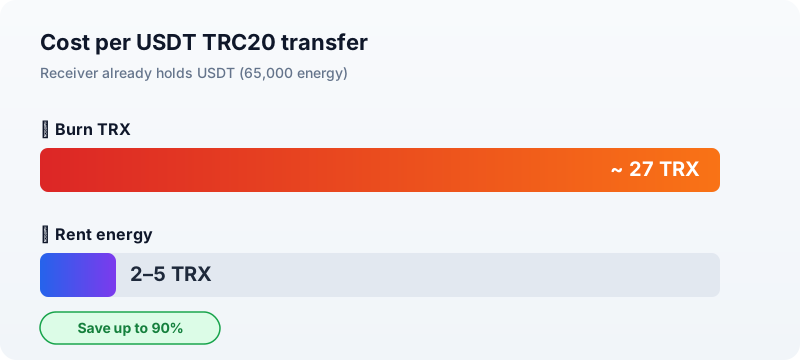
| Method | Cost per transfer (receiver has USDT) |
|---|---|
| Burn TRX | ≈ 27 TRX |
| Stake your own TRX | Lock 5,000+ TRX upfront |
| Rent energy | ≈ 1–3 TRX |
So if you do more than 3–5 transfers per month, renting beats burning — and you skip the capital lockup that staking requires.
How To Get Started
- Make sure your wallet has a small amount of TRX (to pay the rental).
- Open TRX Energy Rental and paste your receiver address.
- Pick a duration (hour or day); energy arrives within seconds of payment.
- Send USDT from that address within the rental window. Energy is used automatically — no TRX burn.
Common Misconceptions
- ❌ "I have plenty of TRX, no need for energy": You're just burning it. Rentals are much cheaper.
- ❌ "Energy never expires": It's time-bound — by the hour or day you purchased.
- ❌ "The receiver also needs TRX": Only the sender burns/uses energy; the receiver just needs a valid address.
Wrapping Up
USDT TRC20 transfers aren't truly "free" — the cost just shifts from miner fees to burned energy. Renting energy is currently one of the cheapest options, and heavy users can save hundreds of TRX per month.
Want to try it now? Buy TRON energy on Tron4u — no signup, pay and go.
Also: How to buy TRON energy · Send USDT without burning TRX.
Frequently asked questions
Why does a USDT TRC20 transfer cost TRX?
USDT on TRON is a TRC20 smart contract, so every transfer consumes energy. If your account has no rented or staked energy, TRON automatically burns TRX to cover the energy cost, which is the TRX you see disappearing.
How much energy does one USDT transfer need?
A USDT TRC20 transfer typically needs about 65,000 energy if the recipient already holds USDT, and around 130,000 energy for a first-time transfer to a fresh address. Renting this energy is far cheaper than letting TRON burn TRX.
How can I reduce USDT transfer fees on TRON?
Rent or buy energy before sending. On tron4u.com a standard transfer is often about 1–3 TRX of rent instead of burning 15–27 TRX — roughly 80–95% cheaper.
Related posts
USDT TRC20 vs BEP20 vs ERC20: Cheapest and Fastest Network
TRC20 vs BEP20 — which should you pick? A side-by-side comparison of the three biggest USDT networks (TRON, BSC, Ethereum) on fees, speed, security, and exchange support, so you choose the right one and never lose funds to a wrong network.
Cheapest TRON Energy Rental in 2026: Real Prices Compared
How much does TRON energy rental cost in 2026? Real price benchmarks: from 0.8 TRX per USDT transfer vs 13–27 TRX burned. What drives the price, what counts as cheap, and how to avoid overpaying.
Best Telegram Bot to Rent TRON Energy in 2026 (From 0.8 TRX)
The best Telegram bot to rent TRON energy, and how to avoid seed-phrase scams: what a safe bot looks like, live quotes, delivery in seconds. Try @tron4u_bot — from 0.8 TRX per USDT transfer.